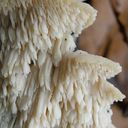
Hallo zusammen!
Danke für die Infos, Heidi! Das habe ich gerade eingetragen, an die Stelle erinnere ich mich.
Ich glaube auch, daß ich mich an den Pilz erinnere, den du wissen willst. Aber ich kann mich nicht erinnern, ob ich daran gerochen habe. Dann wäre mir der Geruch sicher aufgefallen, wenn es ein Gurkenschnitzling gewesen wäre. Aber auch im Aussehen ist die Art eigentlich so charakteristisch, daß ich eher an etwas anderes denken würde. Es gibt ja einen ganzen Haufen kleiner dunkler Lamellenpilze mit konischem Hut...
Sorry.
Übrigens, kleine dunkle Lamellenpilze mit (zumindest jung fast) konischem Hut. Und stark mehlgurkig - ranzigem Geruch:
Da hatte ich einen völlig vergessen. Nämlich
Lyophyllum boudieri = Dunkelstieliges Graublatt


Das kam jedenfalls nach Funga Nordica, Großpilze BWs und Ludwig bei raus.
Sorry wegen dem irre schlechten Makrobild 1. Und die Sporen sind nervig. Die kleben im Abwurf so zäh zusammen, ganz fiese Sache. und wenn man versucht, sie mit KOH3% und etwas rütteln voneinander zu lösen, gehen sie kaputt. Passt aber von Form und Größe trotzdem.
Ich glaube, Norbert hat noch Bilder von der Kollektion.
Nun aber zu den Ramarien. Hier noch mal im Überblick:

Liegt jeweils ein Fitzelchen mit KOH - reaktion dabei. Wobei die nur bei Nummer 3 interessant war. Und da war ich zu spät mit er Kamera. Dazu aber gleich mehr.
Alle Funde geschlüsselt und bestimmt nach Christan.
RAM I = Ramaria abietina var. abietina = Grünende Fichtenkoralle


Ohne Skeletthyphen und auch ohne skeletoide Hyphen in den Rhizomorphen, ebenso in der Asttrama, Schnallen vorhanden, Sporen mit "höckerigem" Ornament. ist schwer abzubilden, das macht meine Kamera nicht mehr ganz mit. Im Okular sieht das aus wie Stacheln, denen man die Spitzen abgebrochen hat.
RAM II = Ramaria apiculata = Grünspitzige Koralle


Nicht so einfach, weil ich da keine Rhizomorphen zum Untersuchen fand. Und ungewöhlnich fand ich die grünen Färbungen an der Strunkbasis und an verletzten Stellen in den Astgabeln. Die Astspitzen sind etwas verblasst, das war im Wald noch etwas deutlicher. Auf Druck und bei Verletzung verfärbt sich das Fleisch und die Oberfläche weinbraun.
Asttrama mit Skeletthyphen (echten, also unseptierten), Schnallen an den generativen Hyphen vorhanden.
Sporen hier mit abgerundetetn Warzen.
Auch hier schwer darzustellen, aber ich hätte die sonst in Bauwollblau kochen müssen. Durchs Okular gut zu sehen, aber für eine gescheite Abbildung braucht die Kamera mehr Kontraste.
RAM III = Ramaria eumorpha = Ockergelbe Koralle


Interessant ist hier die rosa KOH - reaktion, die direkt nach dem Kontakt auftritt und nur wenige Sekunden anhält. Danach ist es nur noch ein schnödes weinrot. Sieht lustig aus, aber so schnell bekomme ich einfach die Kamera nicht drauf.
Wichtig hier sind die Rhizomorphen ohne Skeletthyphen oder skeletoide Hyphen, dafür mit allerhand anderem lustigen Zeug, wie diese dicken, aufgeblasenen Endzellen, die stark erweiterten Septen und die Ölhyphen. Müsste ich jetzt noch mal nachschlagen, wie Christan diese Elemente jeweils nennt, sieht aber toll aus.
Schnallen vorhanden, Sporen nun mal deutlich stachelig
RAM IV = Ramaria stricta = Steife Koralle


In den Rhizomorphen mit echten Skeletthyphen, in der Asttrama aber nur mit skeletoiden Hyphen. Also zwar dickwandig, aber septiert (und mit Schnallen). ZUr Strunkbasis hin fast nur noch mit dünnwandigen hyphen oder schwach dickwandigen Hyphen.
Sporen nur fein rauh, in KOH 3% kaum noch zu erkennen, sieht erstmal fast glatt aus.
Sodala.
Ich habe die Fundliste ein wenig hin und herumgewirbelt. Lateinische Namen habe ich vornehingestellt, um mich selbst nicht zu verwirren. Aus dem selben Grund hatte ich auch einige geringfügige taxonomische Änderungen gemacht. War ja nichts falsch, aber so war's für mich einfacher, sonst hätte ich alles doppelt eingetragen. 
1.[font="Times New Roman"] [/font]Agaricus silvaticus = Kleinsporiger Waldchampignon
2.[font="Times New Roman"] [/font]Agaricus xanthodermus = Karbolegerling
3.[font="Times New Roman"] [/font]Aleuria aurantia = Orangebecherling
4.[font="Times New Roman"] [/font]Amanita citrina = Gelber Knollenblätterpilz
5.[font="Times New Roman"] [/font]Amanita gemmata = Narzißgelber Wulstling
6.[font="Times New Roman"] [/font]Amanita muscaria = Fliegenpilz
7.[font="Times New Roman"] [/font]Amanita porphyria = Porphyrbrauner Wulstling
8.[font="Times New Roman"] [/font]Amanita rubescens = Perlpilz
9.[font="Times New Roman"] [/font]Amanita vaginata s.l. = Artengruppe Grauer Scheidenstreifling
10.[font="Times New Roman"] [/font]Antrodia serialis = Reihige Braunfäuletramete
11.[font="Times New Roman"] [/font]Armillaria gallica = Gelbschuppiger Hallimasch
12.[font="Times New Roman"] [/font]Armillaria mellea = Honiggelber Hallimasch
13.[font="Times New Roman"] [/font]Armillaria ostoyae = Dunkler Hallimasch
14.[font="Times New Roman"] [/font]Ascocoryne sarcoides (als Coryne dubia) = Fleischroter Gallterbecher (Anamorphe)
15.[font="Times New Roman"] [/font]Auricularia auricula-judae = Judasohr
16.[font="Times New Roman"] [/font]Baeospora myosurus = Mäuseschwanz –“ Rübling
17.[font="Times New Roman"] [/font]Bjerkandera adusta = Angebrannter Rauchporling
18.[font="Times New Roman"] [/font]Boletus edulis = Fichtensteinpilz
19.[font="Times New Roman"] [/font]Calocera cornea = Laubholzhörnling
20.[font="Times New Roman"] [/font]Calocera viscosa = Zwergerlfeuer
21.[font="Times New Roman"] [/font]Calvatia excipuliforme = Beutelstäubling
22.[font="Times New Roman"] [/font]Cantharellus amethysteus = Amethystschuppiger Pfifferling
23.[font="Times New Roman"] [/font]Chalciporus piperatus = Pfefferröhrling
24.[font="Times New Roman"] [/font]Chroogomphus rutilus = Kupferroter Gelbfuß
25.[font="Times New Roman"] [/font]Chrysomphalina grossula = Olivgelber Nabeling
26.[font="Times New Roman"] [/font]Clitocybe clavipes = Keulenfüßiger Trichterling
27.[font="Times New Roman"] [/font]Clitocybe ditopa = Kleinsporiger Mehltrichterling
28.[font="Times New Roman"] [/font]Clitocybe fragrans = Dufttrichterling
29.[font="Times New Roman"] [/font]Clitocybe geotropa = Mönchskopf
30.[font="Times New Roman"] [/font]Clitocybe gibba = Ockertrichterling
31.[font="Times New Roman"] [/font]Clitocybe odora = Grüner Anistrichterling
32.[font="Times New Roman"] [/font]Clitopilus prunulus = Mehlräsling
33.[font="Times New Roman"] [/font]Coprinopsis atramentaria = Faltentintling
34.[font="Times New Roman"] [/font]Coprinopsis nivea = Schneeweißer Dungtintling
35.[font="Times New Roman"] [/font]Coprinus comatus = Schopftintling
36.[font="Times New Roman"] [/font]Cortinarius anomalus = Violettbrauner Dickfuß
37.[font="Times New Roman"] [/font]Cortinarius lividoochraceus = Langstieliger Schleimfuß
38.[font="Times New Roman"] [/font]Cortinarius trivialis = Natternstieliger Schleimfuß
39.[font="Times New Roman"] [/font]Craterellus tubaeformis = Tompiffge
40.[font="Times New Roman"] [/font]Crucibulum laeve = Tiegelteuerling
41.[font="Times New Roman"] [/font]Cuphophyllus berkeleyi (Cuphophyllus pratensis var. pallidus) = Weißer Wiesenellerling
42.[font="Times New Roman"] [/font]Cuphophyllus pratensis = Wiesenellerling
43.[font="Times New Roman"] [/font]Cuphophyllus virgineus = Jungfernellerling
44.[font="Times New Roman"] [/font]Cystoderma amianthinum = Amiant –“ Körnchenschirmling
45.[font="Times New Roman"] [/font]Cystoderma carcharias = Starkriechender Körnchenschirmling
46.[font="Times New Roman"] [/font]Dacrymyces stillatus = Zerfließende Gallertträne
47.[font="Times New Roman"] [/font]Entoloma lucidum = Glänzender Glöckling
48.[font="Times New Roman"] [/font]Fomes fomentarius = Zunderschwamm
49.[font="Times New Roman"] [/font]Fomitopsis pinicola = Rotrandiger Baumschwamm
50.[font="Times New Roman"] [/font]Galerina marginata = Gifthäubling
51.[font="Times New Roman"] [/font]Gloeophyllum odoratum = Fenchelporling
52.[font="Times New Roman"] [/font]Gloeophyllum sepiarum = Zaunblättling
53.[font="Times New Roman"] [/font]Gomphidius glutinosus = Kuhmaul
54.[font="Times New Roman"] [/font]Gymnopilus penetrans = Fleckblattflämmling
55.[font="Times New Roman"] [/font]Gymnopus perforans = Nadel –“ Stinkschwindling
56.[font="Times New Roman"] [/font]Gymnopus peronatus = Brennender Rübling
57.[font="Times New Roman"] [/font]Hebeloma crustiliniforme = Tonblasser Fälbling
58.[font="Times New Roman"] [/font]Hebeloma mesophaeum = Dunkelscheibiger Fälbling
59.[font="Times New Roman"] [/font]Helvella lacunosa = Grubenlorchel
60.[font="Times New Roman"] [/font]Hydnum repandum = Semmelstoppelpilz
61.[font="Times New Roman"] [/font]Hygrophoropsis aurantiaca = Falscher Pfifferling
62.[font="Times New Roman"] [/font]Hygrophorus eburneus = Elfenbeinschneckling
63.[font="Times New Roman"] [/font]Hygrophorus lucorum = Lärchenschneckling
64.[font="Times New Roman"] [/font]Hygrophorus olivaceoalbus = Natterstieliger Schneckling
65.[font="Times New Roman"] [/font]Hygrophorus pustulatus = Schwarzpunktierter Schneckling
66.[font="Times New Roman"] [/font]Hypholoma capnoides = Graublättriger Schwefelkopf
67.[font="Times New Roman"] [/font]Hypholoma fasciculare = Grünblättriger Schwefelkopf
68.[font="Times New Roman"] [/font]Hypholoma sublateritium = Ziegelroter Schwefelkopf
69.[font="Times New Roman"] [/font]Inocybe geophylla = Erdblattriger Rißpilz
70.[font="Times New Roman"] [/font]Inocybe lilacina = Violettseidiger Rißpilz
71.[font="Times New Roman"] [/font]Inocybe mixtilis = Gerandetknolliger Rißpilz
72.[font="Times New Roman"] [/font]Ischnoderma benzoinum = Gebänderter Harzporling
73.[font="Times New Roman"] [/font]Kuehneromyces mutabilis = Stockschwämmchen
74.[font="Times New Roman"] [/font]Laccaria amethystea = Violetter Lacktrichterling
75.[font="Times New Roman"] [/font]Laccaria laccata s.l. = Artengruppe Rötlicher Lacktrichterling
76.[font="Times New Roman"] [/font]Laccaria proxima = Rotbrauner lacktrichterling
77.[font="Times New Roman"] [/font]Lactarius blennius = Graugrüner Milchling
78.[font="Times New Roman"] [/font]Lactarius controversus = Rosascheckiger Milchling
79.[font="Times New Roman"] [/font]Lactarius deliciosus = Edelreizker
80.[font="Times New Roman"] [/font]Lactarius deterrimus = Fichtenreizker
81.[font="Times New Roman"] [/font]Lactarius glyciosmus = Blasser Koksflockenmilchling
82.[font="Times New Roman"] [/font]Lactarius pubescens = Flaumiger Milchling
83.[font="Times New Roman"] [/font]Lactarius pyrogalus = Haselmilchling
84.[font="Times New Roman"] [/font]Lactarius quieticolor = Wechselblauer Edelreizker
85.[font="Times New Roman"] [/font]Lactarius rufus = Rotbrauner Milchling
86.[font="Times New Roman"] [/font]Lactarius subdulcis = Süßlicher Buchenmilchling
87.[font="Times New Roman"] [/font]Lactarius torminosus = Gezonter Birkenmilchling
88.[font="Times New Roman"] [/font]Lasiobolus cuniculi = Schlankborstiger Haar-Dungbecherling
89.[font="Times New Roman"] [/font]Leccinum scabrum = Gemeiner Birkenpilz
90.[font="Times New Roman"] [/font]Lentinus adhaerens = Harziger Sägeblättling
91.[font="Times New Roman"] [/font]Lepiota castanea = Kastanienbrauner Schirmling
92.[font="Times New Roman"] [/font]Lepiota cristata = Stinkschirmling
93.[font="Times New Roman"] [/font]Lepiota felina = Schwarzschuppiger Schirmling
94.[font="Times New Roman"] [/font]Lepista / Clitocybe nebularis = Nebelkappe
95.[font="Times New Roman"] [/font]Lepista nuda = Violetter Rötelritterling
96.[font="Times New Roman"] [/font]Lycogala epidendrum = Blutmilchpilz
97.[font="Times New Roman"] [/font]Lycoperdon perlatum = Flaschenstäubling
98.[font="Times New Roman"] [/font]Lycoperdon pyriforme = Birnenstäubling
99.[font="Times New Roman"] [/font]Lyophyllum boudieri = Dunkelstieliges Graublatt
100.[font="Times New Roman"] [/font]Lyophyllum connatum = Weißer Büschelrasling
101.[font="Times New Roman"] [/font]Lyophyllum decastes = Brauner Büschelrasling
102.[font="Times New Roman"] [/font]Lyophyllum rancidum = Wurzel –“ Graublatt
103.[font="Times New Roman"] [/font]Macrolepiota procera = Parasol
104.[font="Times New Roman"] [/font]Macrotyphula filiformis = Binsen –“ Röhrenkeule
105.[font="Times New Roman"] [/font]Marasmiellus ramealis = Ästchen –“ Zwergschwindling
106.[font="Times New Roman"] [/font]Megacollybia platyphylla = Breitblatt
107.[font="Times New Roman"] [/font]Mutinus caninus = Hundsrute
108.[font="Times New Roman"] [/font]Mycena aurantiomarginata = Orangeschneidiger Helmling
109.[font="Times New Roman"] [/font]Mycena capillaris = Buchenblatt –“ Fadenhelmling
110.[font="Times New Roman"] [/font]Mycena crocata = Orangemilchender Helmling
111.[font="Times New Roman"] [/font]Mycena epipterygia = Dehnbarer Helmling
112.[font="Times New Roman"] [/font]Mycena galericulata = Rosablättriger Helmling
113.[font="Times New Roman"] [/font]Mycena haematopus = Großer Blutmilchhelmling
114.[font="Times New Roman"] [/font]Mycena inclinata = Buntstieliger Büschelhelmling
115.[font="Times New Roman"] [/font]Mycena picta = Walzenförmiger Helmling
116.[font="Times New Roman"] [/font]Mycena pura = Gemeiner Rettichhelmling
117.[font="Times New Roman"] [/font]Mycena purpureofusca = Purpurschneidiger Helmling
118.[font="Times New Roman"] [/font]Mycena rosea = Rosa Rettichhelmling
119.[font="Times New Roman"] [/font]Mycena sanguinolenta = Kleiner Blutmilchhelmling
120.[font="Times New Roman"] [/font]Mycena stipata = Viersporiger Nitrathelmling
121.[font="Times New Roman"] [/font]Mycena zephirus = Rostfleckiger Helmling
122.[font="Times New Roman"] [/font]Oligoporus stipticus = Bitterer Saftporling
123.[font="Times New Roman"] [/font]Panellus stipticus = Herber Zwergknäueling
124.[font="Times New Roman"] [/font]Paxillus involutus = Kahler krempling
125.[font="Times New Roman"] [/font]Phaeolus spadiceus = Nadelholz –“ Braunporling
126.[font="Times New Roman"] [/font]Phlebiopsis gigantea = Grpßer Zystiden –“ Kammpilz
127.[font="Times New Roman"] [/font]Pholiota adiposa (aurivella) = Hochthronender / Schleimiger Schüppling
128.[font="Times New Roman"] [/font]Pholiota lenta = Tonblasser Schüppling
129.[font="Times New Roman"] [/font]Pholiota squarrosa = Sparriger Schüppling
130.[font="Times New Roman"] [/font]Piptoporus betulinus = Birkenporling
131.[font="Times New Roman"] [/font]Plicaturopsis crispa = Krauser Adernzähling
132.[font="Times New Roman"] [/font]Pluteus cervinus = Rehbrauner Dachpilz
133.[font="Times New Roman"] [/font]Polyporus brumalis = Winterporling
134.[font="Times New Roman"] [/font]Postia caesia = Blauer Saftporling
135.[font="Times New Roman"] [/font]Psathyrella piluliformis = Weißstieliges stockschwämmchen
136.[font="Times New Roman"] [/font]Psathyrella tenuicola = Wildschweindung –“ Faserling
137.[font="Times New Roman"] [/font]Pycnoporus cinnabarinus = Zinnoberporling
138.[font="Times New Roman"] [/font]Ramaria abietina = Grünende Fichtenkoralle
139.[font="Times New Roman"] [/font]Ramaria apiculata = Grünspitzige Koralle
140.[font="Times New Roman"] [/font]Ramaria eumorpha = Ockergelbe Koralle
141.[font="Times New Roman"] [/font]Ramaria stricta = Steife Koralle
142.[font="Times New Roman"] [/font]Ramariopsis cf kunzei = vermutlich Weißliche Wiesenkoralle
143.[font="Times New Roman"] [/font]Rhodocollybia butyracea = Butterrübling (incl. var. asema = Horngrauer Rübling)
144.[font="Times New Roman"] [/font]Rickenella fibula = Orangener Heftnabeling
145.[font="Times New Roman"] [/font]Russula caerula = Buckeltäubling
146.[font="Times New Roman"] [/font]Russula queletii = Stachelbeertäubling
147.[font="Times New Roman"] [/font]Schizophyllum commune = Spaltblättling
148.[font="Times New Roman"] [/font]Sparassis crispa = Krause Glucke
149.[font="Times New Roman"] [/font]Stereum hirsutum = Striegliger Schichtpilz
150.[font="Times New Roman"] [/font]Stropharia semiglobata = Halbkugeliger Träuschling
151.[font="Times New Roman"] [/font]Suillus grevillei = Goldröhrling
152.[font="Times New Roman"] [/font]Suillus luteus = Butterpilz
153.[font="Times New Roman"] [/font]Tapinella atrotomentosa = Samtfußkrempling
154.[font="Times New Roman"] [/font]Tapinella panuoides = Muschelkrempling
155.[font="Times New Roman"] [/font]Trametes hirsuta = Striegelige Tramete
156.[font="Times New Roman"] [/font]Trametes versicolor = Schmetterlingstramete
157.[font="Times New Roman"] [/font]Tricholoma fulvum = Gelbblättriger Ritterling
158.[font="Times New Roman"] [/font]Tricholoma pessundatum = Getropfter Ritterling
159.[font="Times New Roman"] [/font]Tricholoma populinum = Pappelritterling
160.[font="Times New Roman"] [/font]Tricholoma saponaceum = Seifenritterling
161.[font="Times New Roman"] [/font]Tricholoma scalpturatum = Gilbender Erdritterling
162.[font="Times New Roman"] [/font]Tricholoma sulphureum = Schwefelritterling
163.[font="Times New Roman"] [/font]Tricholoma terreum = Gemeiner Erdritterling
164.[font="Times New Roman"] [/font]Tricholoma vaccinum = Bärtiger Ritterling
165.[font="Times New Roman"] [/font]Tubaria conspersa = Flockiger Trompetenschnitzling
166.[font="Times New Roman"] [/font]Tubaria furfuracea = Gemeiner Trompetenschnitzling
167.[font="Times New Roman"] [/font]Ustulina deusta = Brandkrustenpilz
168.[font="Times New Roman"] [/font]Xerocomus badius = Maronenröhrling
169.[font="Times New Roman"] [/font]Xerocomus chrysenteron = Gemeiner Rotfußröhrling
170.[font="Times New Roman"] [/font]Xerocomus ferrugineus = Brauner Filzröhrling
171.[font="Times New Roman"] [/font]Xerocomus pruinatus = Bereifter Rotfußröhrling
172.[font="Times New Roman"] [/font]Xerocomus subtomentosus = Ziegenlippe
173.[font="Times New Roman"] [/font]Xylaria hypoxylon = Geweihförmige Holzkeule
LG, Pablo.